


Pro-life video of the day: The “Mozart Effect” – soothes preemies
by Hans Johnson
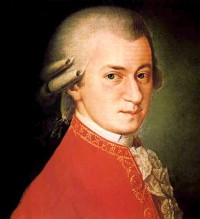 Music has long been known to “soothe the savage breast,” but in recent years we have seen the Mozart Effect touted for everything from raising one’s IQ to mitigating epileptic symptoms. A study on 20 premature infants at Tel Aviv Medical Center played Mozart for one group for 30 minutes on two consecutive days. No music was played for the other group. The babies who listened to music were less agitated, expended less energy, and needed fewer calories. Thus they presumably could gain weight and thrive more quickly.
Most recently, doctors at Tel Aviv Saurasky Medical Center sought to differentiate the effects of different classical music by observing 12 babies born in the 30th week of gestation with an average weight of 2.5 lbs. From Haaretz:
The music was played from iPads placed outside the incubators, with earphones in the incubators adapted to the babies’ ears at a volume of 75 decibels. An instrument measuring the absorption of oxygen and emission of carbon dioxide was attached to the babies, enabling researchers to calculate the babies’ metabolic rates….
Following only half an hour of exposure to Mozart’s music, the metabolic rate dropped by 9.7 percent in comparison to babies who weren’t exposed to music at all. Listening to Bach led to a drop of 4.5 percent in the metabolic rate, in comparison to those not exposed to music, but this drop wasn’t deemed to be statistically significant.
The effect of Mozart’s music was very swift: Ten minutes after beginning to listen to his music, the metabolic rate dropped by 4.5 percent. This drop continued as the music went on, in comparison to the babies who weren’t exposed to music.
Here is a YouTube video of a 5-month old enjoying Mozart:
[youtube]http://www.youtube.com/watch?v=_Lgg04BOaII[/youtube]
Email dailyvid@jillstanek.com with your video suggestions.
[HT: TheBlaze]

 Jill Stanek is a nurse turned speaker, columnist and blogger, a national figure in the effort to protect both preborn and postborn innocent human life.
LOL, beast! Soothes the savage BEAST!
Kelsey, LOL!! No, wait, it sooths the savage fembots in an Austin Powers movie!
Kelsey, I did a double take too.
*rushes out to get Mozart for my baby*
Hey LibertyBelle is the baby born yet or are you still expecting? Boy or girl? I’ve been wondering how you’ve been doing!
I listen to classical and opera a lot. My son likes it but my daughter prefers my heavy metal lol.
‘cuz she’s awesome.
But neither of them will let me listen to my old school punk!!
Ahem
Meaning
Literal meaning. That literal meaning may be misinterpreted somewhat as this phrase is commonly misreported as ‘music has (or occasionally ‘hath’) charms to soothe the savage beast’. In fact, at the time of writing (Nov 2006) there are twice as many listed for the incorrect version of the phrase as for the correct one.
Origin
The phrase was coined by William Congreve, in The Mourning Bride, 1697:
http://www.phrases.org.uk/meanings/252000.html
http://en.wikipedia.org/wiki/William_Congreve
I stand corrected.
Hi Jack -
Nope, he’s not here yet. :P But it could be any day now and I’ve been put on bed rest due to the amazing pre-eclampsia. Needless to say, things have been a little crazy.
He already loves music. So far, he doesn’t seem to be picky (takes after his mama) but he’ll be exposed to a variety of genres. Poor thing would probably prefer anything but my voice lol
Glad to be back though.
Kelsey,
I stand corrected.
To tell the truth, I thought it was from Byron or Keats or one of those bewigged dudes. It turns out it was from another bewigged dude. ;)
Yeah, I looked it up before posting yesterday, because I thought it was wrong, too. But it is “breast” not “beast.” I’ve apparently been misquoting it my whole life.
Wow, you learn something every day. I’ve been saying this wrong my whole life! Argh!
The phrase has to do with calming your breath, just as with the preemies.
Yay, I learned something today.